

More Human, Less Robot
Creative output ≠ your worth

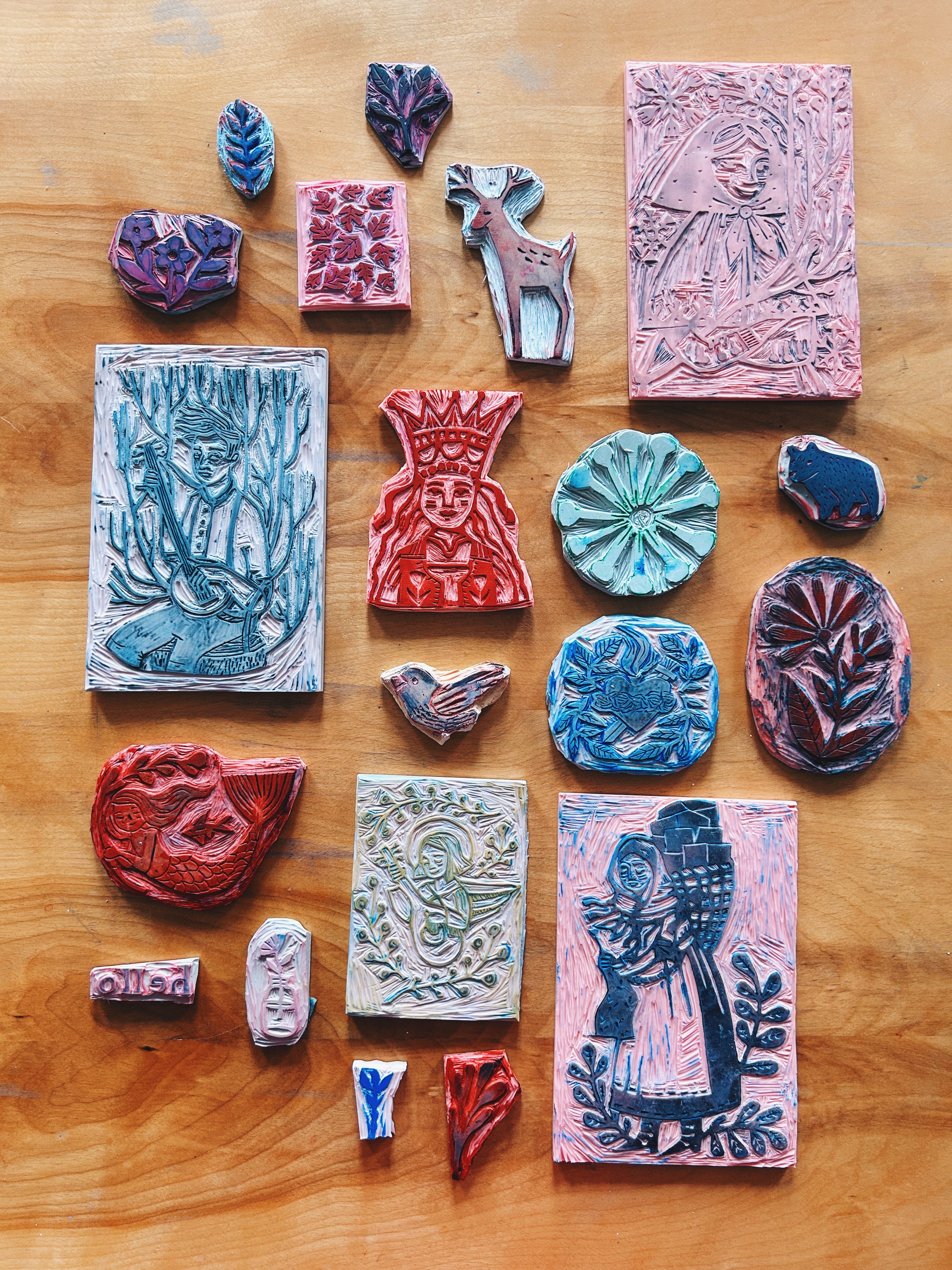
I was sorting linoleum blocks the other day. This looks like a lot, but as context, the above is 18 years worth of making. I don’t carve quickly — illustration jobs, work and life all are at the front of the queue. But I go at a speed I can sustain, one that assures that printmaking stays an enjoyable hobby and not a grueling side hustle. I am fine being an occasional, poky print maker. But sometimes I forget this.
It’s hard not to feel overwhelmed by the sheer volume of content online. And then the guilt kicks in. Should I be producing as much as so-and-so? Have a body of work as impressive as fill-in-the-blank? In the middle of deadlines, I have plenty of art finished, but nothing to show publicly. This just feeds the unease.
It’s hard not to conflate creative output with personal worth. Everyone, everywhere seems to be making constantly, sharing regularly and moving ahead predictably. But art doesn’t always come that easily. Babies want holding. Elderly family need care. Health requires attention. We’re all faced with a myriad of constraints and commitments that pull us in a thousand directions. But sometimes the detours shape us more than the destination. Sometimes the seeming distraction is the greater good. We are not machines that can operate with unerring accuracy at all times.
I have to remind myself of this continuously.
If I just add one more piece to my portfolio.
If I spend a few more hours on my shop.
If I just blur all the boundaries, that’s all it will take to move myself forward.
And then I’ll be miserable, without a shred of creativity left. I know, because I’ve lived that reality before.
There are times to move with speed. That idea that just won’t quit? Go ahead and stay up until the wee hours of the morning if that lights you up. Deadline fast approaching? Keep it moving. But when you have the time and the space? You can give yourself permission to work slowly. You are still an artist whether you make one drawing or a hundred in a year. I’m saying this as much for myself as for anyone reading this.
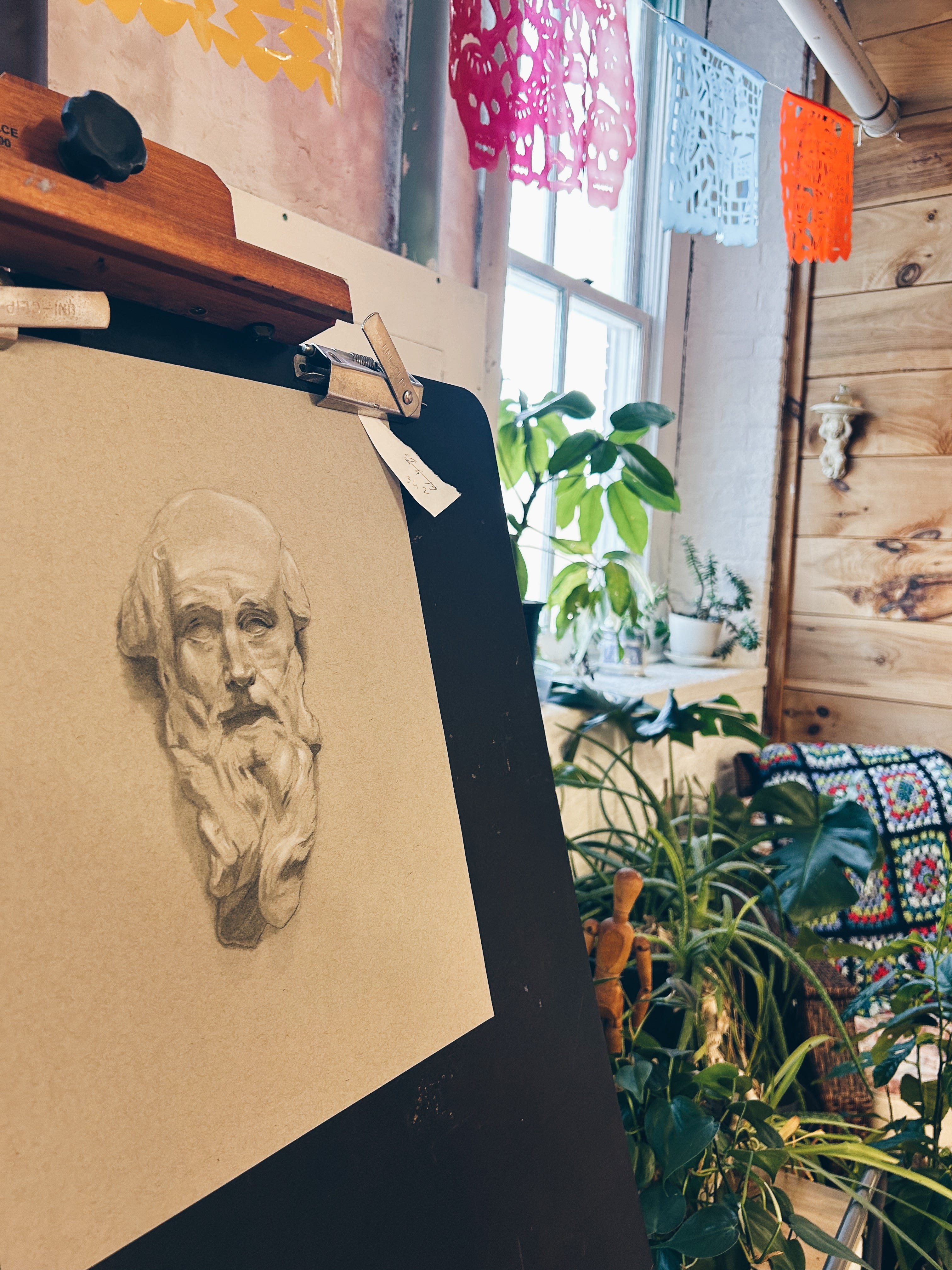
I’ve been working on this cast drawing of St. Andrew since autumn (lesson here). This is from January and I finally finished the piece last weekend. If there’s one thing that classical drawing has taught me it’s this: slow down. Building up values with care and restraint still doesn’t come naturally to me. But I am learning. Learning to continually check measurements. To think deeply about the relationship between shapes and lines. To move at a pace that in the 21st century feels nearly alien. I haven’t found a way to speed up this sort of art — it’s created with layers and layers of time and offers no shortcuts. I think that’s why I’ve come to like it so much: it’s art making completely at odds with the modern world.
I know firsthand the dangers of thinking that what I make is who I am. It’s something I’ve struggled with for eons. A solid work ethic is something to take pride in. Soldiering away until you’re a hollowed out hull of yourself, not so much. So make as much (or as little) as you want. Share it (or don’t). Just don’t think of yourself as less-than for making at a seemingly different pace than everyone around you.
Let’s be humans, not robots.
I think we could probably do with less art in the world, if it means people take more time, focus on the craft of it, and we end up with well-considered, beautiful things. I sometimes worry that the 'everyone's an artist' idea is an excuse for just knocking things out. Anyone can be an artist - just like an anyone can be a carpenter or a plumber - but you do have to take time to get good at it. Otherwise you get wonky bookcases, leaking sinks, and bad drawings.
Your work is high caliber. I think many of us that post often are beginners. I know for me, I'm using substack as an organized document to show progression of my painting.