

Speaking Without Words
Processing the world through pictures

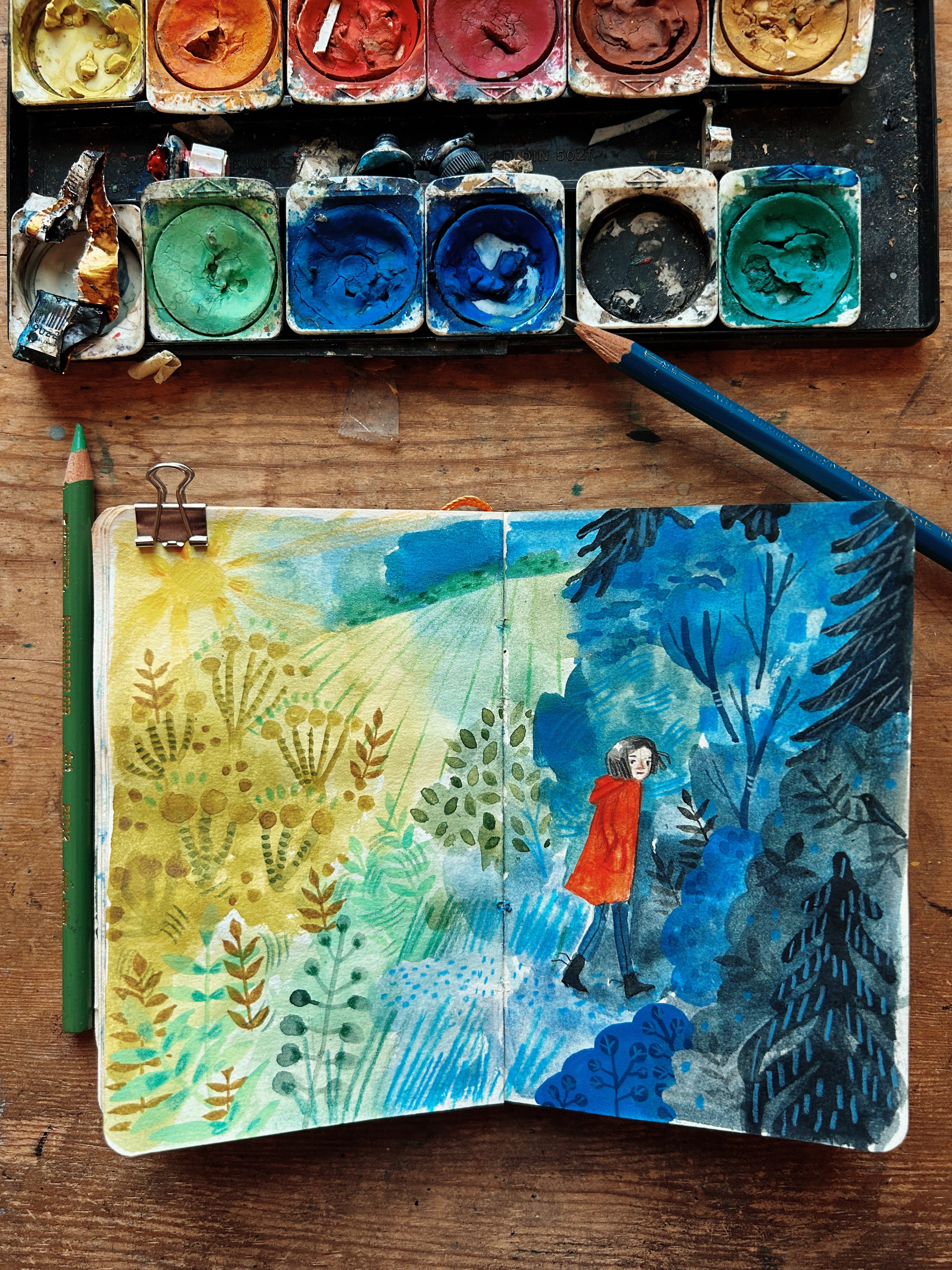
Sometimes the words won’t come. But pictures do. So over the years, I’ve learned to let art-making help me process the world.
Art communicates sometimes as much to ourselves as it does to others. Often more. I’ve been surprised (and enlightened) over the years with people’s responses to what I draw. “Oh, you included so-and-so in that!” “That green really speaks to exuberance and hope!” “That’s very different from most of what you make.” What often gives me pause is that the observation being shared is a first for me. I hadn’t thought of the situation like that. I didn’t realize I painted things like so. I’m telling a story through illustration, but it’s telling a story back to me.
I painted the above this week with no clear goal in mind, no story I wanted to tell. I just started blocking in colors and shapes, my only plan to shift from light to dark across the page. But looking at the sketch now, there’s things I can see. The past year has required decision making and reevaluation, things I’d never willingly seek out. The unknown feels frightening at times, much like the night-time forest the young girl is entering. But she looks nonplussed. Maybe even determined? And the bold, brave color of the coat stands in stark contrast to the world she’s walking into.
So onward.

When I painted this in 2018, I knew exactly what was going on, however. I had just had a CT scan to determine the location of a rapidly growing mass that had appeared on dental x-rays. Surgery was recommended and the imaging was to assist in the process. I waited several days for the results, painting to steady my nerves. In the end, the CT scan wasn’t able to detect anything and I was given a clean bill of health. But when I look back at this, I remember all the feelings of fragility and fear and how this page helped me navigate those emotions.

And there was “Mouseboat,” the book that held a mirror up to grief. I lost my grandmother during lockdown and two weeks later, started book sketches. The story gave my loss a much needed outlet. Making those illustration was deeply cathartic and it’s a book that I’m profoundly grateful to have illustrated. There’s lots of little hidden cues in the artwork, moments of pain expressed. In the spread above, there’s an obvious indicator of loss, like the empty chair. But there are quieter expressions of grief here, too. I chose to draw the father still wearing his wedding band following his wife’s passing. This is a deeply personal choice, when and if that ring is taken off. In this particular moment, I wanted to show the father wearing the ring, his wife’s passing fresh and his emotions raw. It’s a tiny detail, but one I was happy to see a reviewer pick up on.
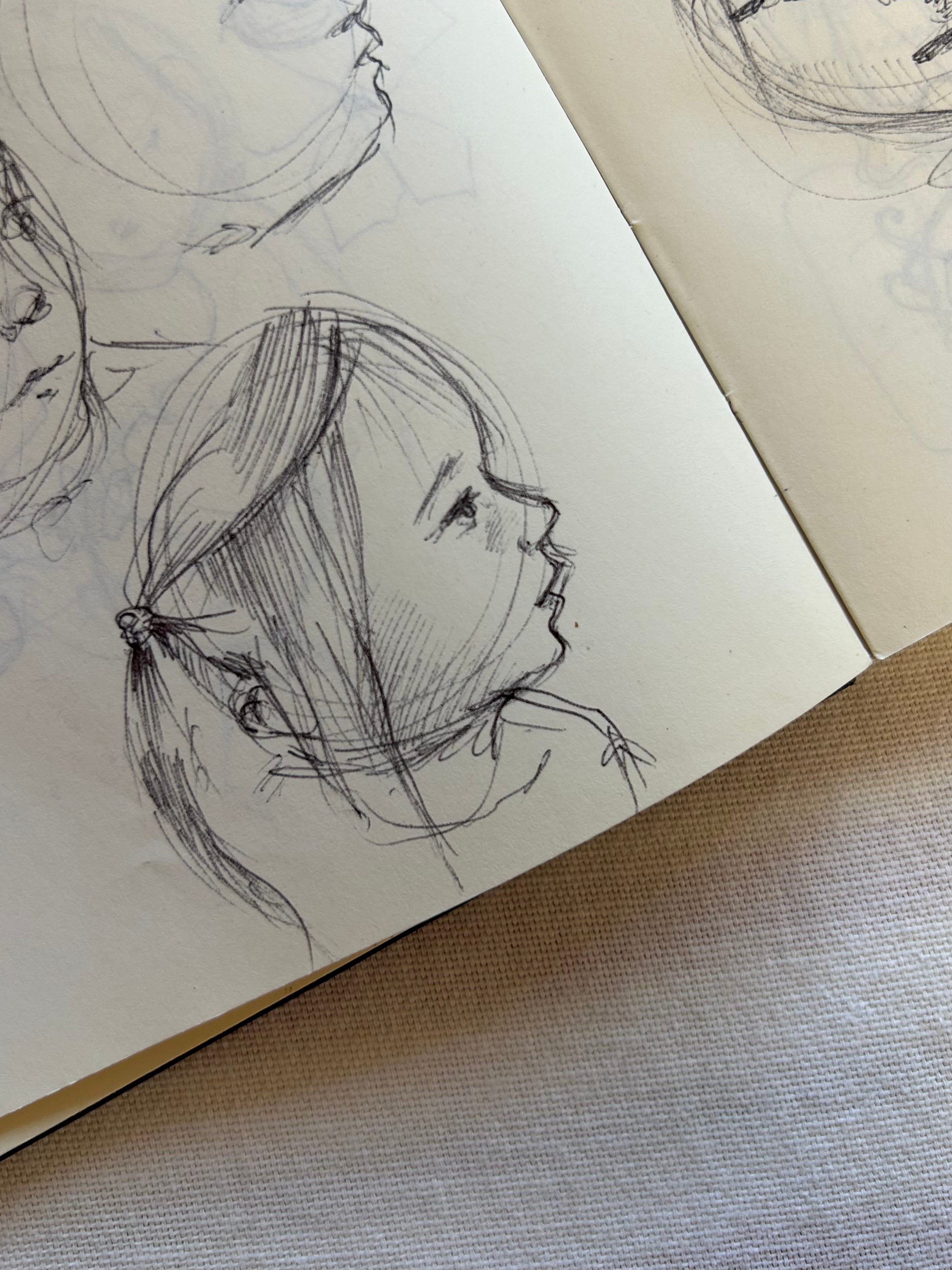
And there’s joy, the joy that you don’t appreciate sometimes until much later. I drew this sketch of my niece years ago; she’s about two years old in this drawing. Last month she started her sophomore year of college, studying physics. This is very much a sketch of a toddler watching cartoons (I’m going to hazard a guess it was The Backyardigans). Although this is her as a child, I can see the fire in the eyes and the determination that underpin who my niece is now, as an adult.
I’ve kept a sketchbook regularly since college and routinely go back through the pages. It’s an archaeological dig, a chance to figure out who I was and who I might be. And there aren’t always answers. Sometimes a doodle is just a doodle. But sometimes, we get the opportunity to unearth a bit about ourselves. And that knowledge is a gift.
Wow, I love this line: "I’m telling a story through illustration, but it’s telling a story back to me." It made me realize that I often feel the same way with my writing.
"I’m telling a story through illustration, but it’s telling a story back to me." This sums up the heart of art so well. Thank you for writing this!